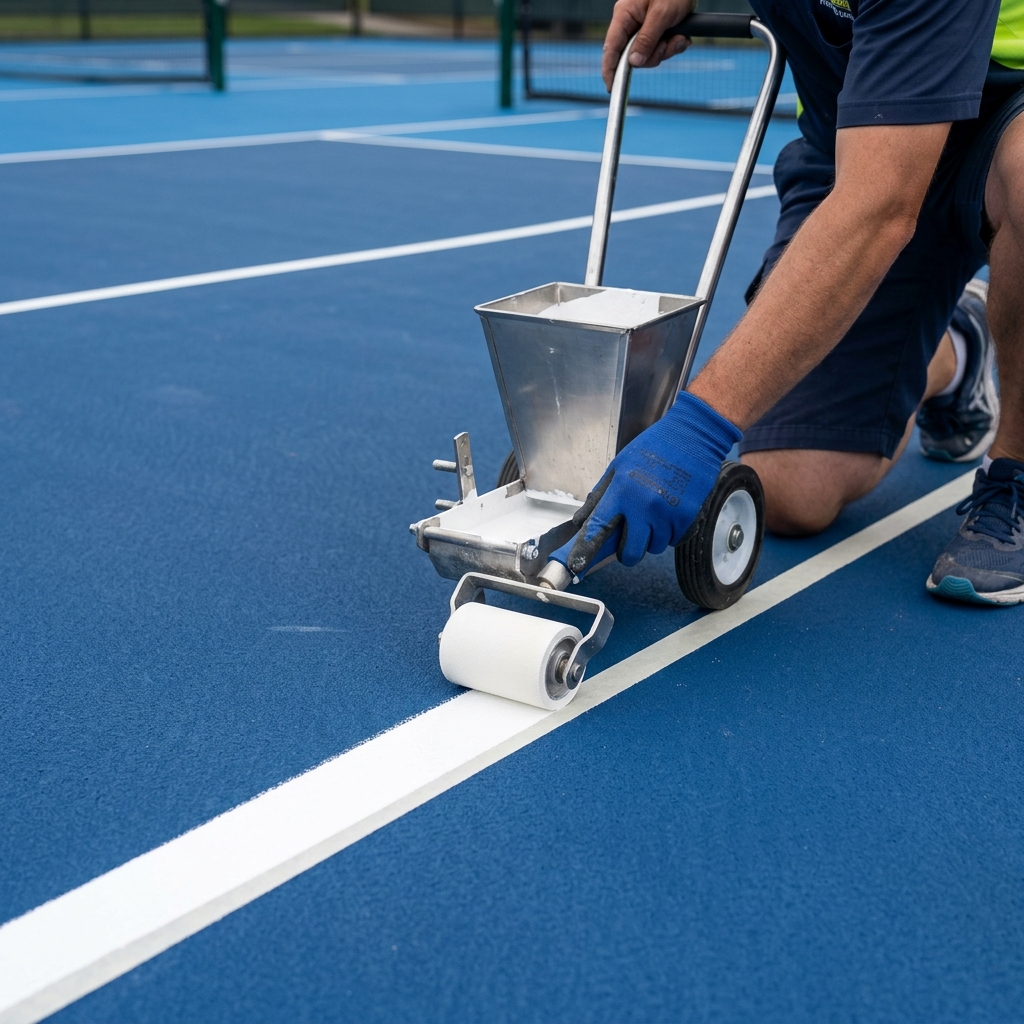
In the booming Maricopa County market, the surge in demand has led to an influx of “generalist” contractors claiming to be pickleball court builders. However, building a high-performance court in the Arizona desert is an engineering feat that requires more than a standard concrete pour.
The Geology of the Valley: Why Soil Matters
The foundation of every Dink Sport Court starts with a geological understanding of the Southwest. Maricopa County is notorious for “expansive” bentonite clay soils. When these soils encounter moisture during a monsoon, they swell; in the 115°F summer heat, they shrink aggressively. A general contractor might treat a court like a driveway, but a specialized builder understands that this soil movement is the #1 cause of structural “spiderweb” cracking.
The Dink Construction Standard
- Sub-Grade Stabilization: We don’t just clear land; we scarify and compact the sub-grade to maximum practical density using high-force plate compactors.
- Vapor Barrier Integration: A critical, often-skipped step in residential builds is the installation of a 6-mil or 10-mil polyethylene vapor barrier beneath the slab. This prevents groundwater vapor from migrating through the concrete, which is the primary cause of the surface “blistering” seen on amateur courts.
- Laser-Level Grading: To ensure proper drainage without compromising play, we grade the sub-base to a precise 1% slope (one-eighth inch per foot). This ensures water sheds rapidly during heavy Arizona rain without creating a “leaning” feel for the players.
Why Specialized Expertise Wins
Hiring a specialist means your court is built to USA Pickleball regulation standards—20’ x 44’ playing area with a minimum 30’ x 60’ overall footprint to allow for safe out-of-bounds play. We ensure the net is exactly 36 inches at the sidelines and 34 inches at the center, creating the perfect tournament-grade sag.
